


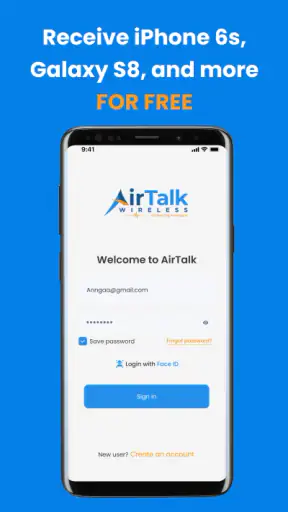
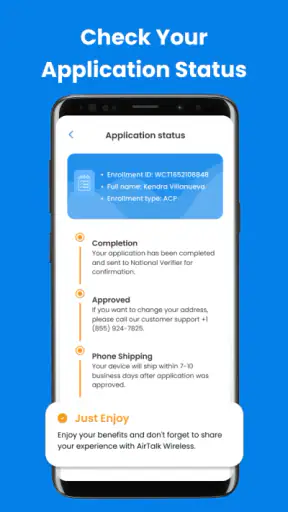
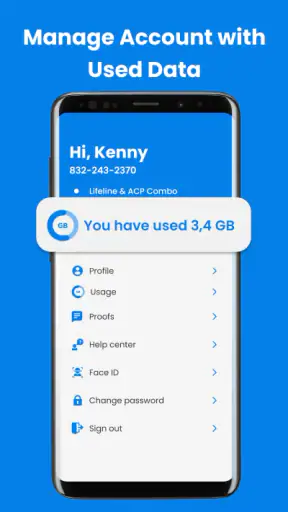

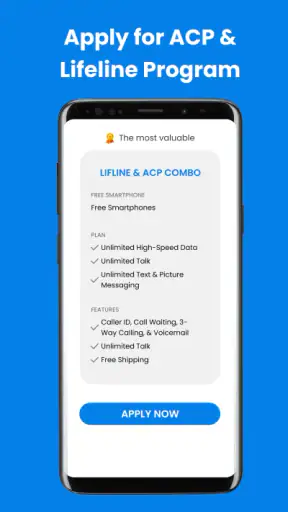
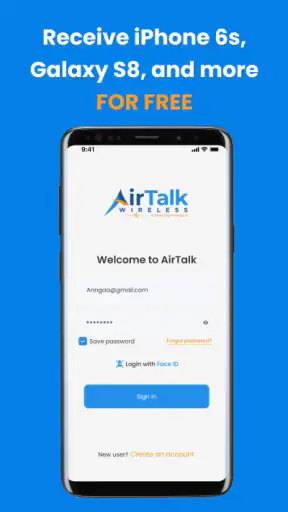
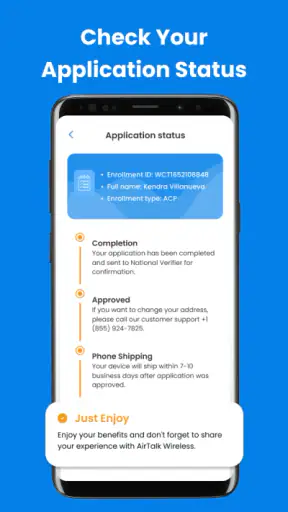
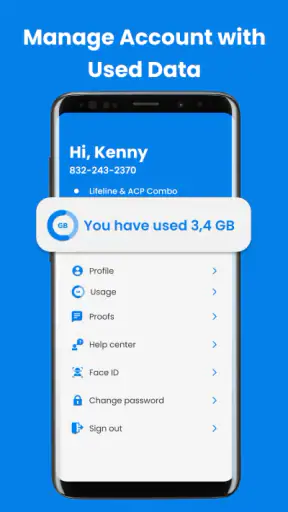
I approached AirTalk Wireless as a practical business app rather than something I would open for entertainment. Its purpose is tied to managing wireless service, so the real question is not whether it looks exciting, but whether it makes everyday account tasks feel clear, quick, and dependable. In my experience, that is the right way to judge it: can I use it when I need to check my service, understand what is happening with my account, or deal with a wireless-related task without turning to a browser or a phone call?
The app is free, aimed at everyone, and developed by HTH Communications. It has built a sizable audience, with more than a million installs, a 4.6 average from roughly forty-two thousand ratings, and about six thousand eight hundred written reviews. Those figures suggest that many people find it useful, although they should not replace your own expectations. A wireless-service app can be perfectly adequate for routine account management while still feeling less satisfying during a complicated issue.
AirTalk Wireless was released on May 6, 2022, and version 2.8.4 is the version I reviewed. It runs on Android 7.0 or later, which is helpful if you keep an older phone instead of upgrading frequently. I would describe it as a focused utility: valuable when it reduces small bits of friction, but not the sort of app that needs to remain open all day.
How AirTalk Wireless feels during everyday use
Speed expectations for simple account tasks
The first thing I noticed is that the app makes most sense when I treat it as a single-purpose doorway into wireless service. I am not expecting a full desktop-style control center or a long list of advanced tools. I want to open it, identify the relevant account area, and finish a straightforward task without wandering through unrelated screens.
For that kind of use, the perceived speed matters more than raw animation. A clean transition between screens is nice, but the important moment is the pause after I request account information or move between service-related sections. On a strong connection, the experience feels appropriately lightweight for an app in the business category. It does not need the heavy visual machinery of a shopping or social platform, and that helps it feel more direct.
There is also a practical advantage to not expecting constant activity from it. I can install it, sign in when necessary, complete a task, and close it. That makes it different from apps that demand regular attention. If your goal is to monitor every detail continuously, you may find the experience less compelling than a broader account dashboard. If you mainly want a mobile route to your wireless account, the focused approach is easier to live with.
One useful habit is to open the app before you are in a hurry. I prefer checking that I can sign in and reach the relevant account area while my connection is stable, rather than waiting until I am traveling or dealing with an urgent service problem. This is not a special feature; it is simply a better workflow for any service app, and it matters because a short delay feels much longer when the phone is already having connectivity trouble.
What happens during heavier-use moments
AirTalk Wireless is not a resource-hungry game or a media editor, so “heavy use” means something different here. The demanding moments are likely to be account loading, repeated navigation, or trying again when a request does not complete cleanly. The app itself is not the only factor. Network quality, the phone’s age, and the responsiveness of the service behind the screen can all affect what I perceive.
On an older device, I would expect the basic interface to be more comfortable than a visually elaborate application. The minimum operating-system requirement of Android 7.0 keeps the door open to older hardware, but compatibility does not guarantee identical speed on every phone. A device with limited free storage, many background apps, or an aging battery may make any account utility feel slower than it does on a newer handset.
The most realistic stress case is not leaving the app open for hours. It is switching between sections while trying to verify information, then repeating an action because I am unsure whether the first attempt worked. That is where clear feedback becomes important. I would slow down after each submission and confirm the result before tapping again. Repeated taps can create confusion, especially when a wireless account action has a delayed response.
Another sensible approach is to close unrelated apps first if the phone is struggling. AirTalk Wireless is unlikely to benefit from being surrounded by several memory-heavy apps, and clearing that clutter can make the whole device feel more responsive. I would not install a separate “booster” tool for this purpose. A simple restart or closing unused apps is less intrusive and easier to reverse.
Stability and recovery when something goes wrong
For a service app, reliability is not only about avoiding crashes. It is also about recovering gracefully when the connection changes, a session expires, or a screen takes longer than expected. My standard test for an app like this is simple: if I leave a stable network, return later, and try again, can I understand what to do without starting from scratch mentally?
I would use AirTalk Wireless on dependable Wi-Fi when handling an important account task, especially if mobile coverage is inconsistent. That choice does not make the app faster by itself, but it removes one common source of uncertainty. If a page stalls, I can then distinguish a connection problem from a problem with the app more easily.
When recovery is needed, I would follow a measured sequence rather than repeatedly pressing the same control. First I would wait briefly, then check whether the screen has updated. If it has not, I would return to the previous area and try once more. If the app still behaves oddly, I would fully close it and reopen it. This workflow is particularly useful for avoiding duplicate actions or assuming that an incomplete screen means the account itself has changed.
That recovery advice is also where I see the main limitation of a focused wireless app. Routine actions can be convenient, but a complex account problem may still require patience or another support route. App access is not the same as complete issue resolution. If your concern involves an unusual service situation, a billing question, or something that needs personal explanation, I would not rely on the app alone. I would use it to gather context first, then move to the appropriate support channel if the mobile workflow does not settle the matter.
Older phones, newer phones, and practical constraints
The Android 7.0 minimum is one of the more useful facts for people who keep an older phone. It means the app is not restricted to only recent Android releases. That said, an older operating system can come with trade-offs. You may have less available memory, slower storage, and fewer system-level optimizations than someone using a current device. The app may install successfully while still feeling less immediate during account loading.
I would also think about screen size. Wireless account information is easier to understand on a comfortable display, while a small or damaged screen can make navigation and confirmation steps more tiring. This is not a reason to reject the app, but it changes how I would use it. On a compact phone, I would avoid rushing and would read each confirmation carefully before continuing.
Battery impact is another practical consideration. Because AirTalk Wireless is a business utility rather than a constant-content app, I would not expect a reason to keep it active throughout the day. My preference would be to open it for a specific task and close it afterward. That keeps the app’s role clear and avoids treating a service tool like a background companion.
People who share devices should also be deliberate about account access. I would not leave a wireless account open on a phone that other people use casually. A dedicated account app can be convenient, but convenience should not mean forgetting who can pick up the device. Signing out when appropriate and using the phone’s normal security protections are sensible habits, particularly if the device is shared or frequently left unattended.
Where it fits beside the usual alternatives
The usual alternative is a mobile browser. A browser can be better when I need to compare several pages, keep multiple tabs open, or use a larger screen. It is also more flexible for researching an issue outside the account itself. On the other hand, a dedicated app can feel more direct because it gives the wireless service its own place on the phone instead of making me remember a web address or search through browser history.
Another alternative is contacting support directly. That is preferable when I need a person to interpret a complicated situation or explain an exception. The trade-off is time and dependence on another channel. AirTalk Wireless is more appealing for routine self-service, where I already know what I want to check and do not need a conversation.
I would not compare it with general productivity apps, because that would miss its purpose. Its value is narrow but concrete. It is not trying to replace notes, email, messaging, or a complete business suite. The right comparison is between a dedicated wireless account tool, a browser-based account page, and direct support. In that group, the app makes the strongest case when I want repeatable access from my phone and do not need a long explanation.
Specific workflows that make it more useful
My preferred workflow is to use the app at a calm moment for verification, then return only when there is a clear reason. For example, before leaving home for a trip, I would check the account while connected reliably and make sure I understand the current service situation. I would not wait until I am standing somewhere with weak reception and trying to solve several problems at once.
A second useful habit is to separate checking from changing. I would first review the information available to me, then decide whether an action is actually necessary. This reduces accidental taps and gives me a clearer reference point if I later need help. It is especially valuable when the app is responding slowly, because I am less likely to repeat an action simply because I am impatient.
A third trade-off involves older hardware. If AirTalk Wireless is installed on a phone that is already crowded with apps, I would keep enough free space for normal system operation and restart the phone before an important account task. The app’s Android compatibility is helpful, but the phone’s overall condition still controls much of the experience. A supported operating system is a starting point, not a promise of identical performance.
For families, I would also decide who is responsible for account changes before installing the app on multiple devices. One person can use it for routine checks while another handles more sensitive decisions. That small bit of organization prevents the app from becoming a source of uncertainty about who last changed or reviewed something.
Who should use it, and who should choose something else
I think AirTalk Wireless is a good fit for someone who uses AirTalk Wireless service and prefers handling ordinary account needs from an Android phone. It is particularly suitable for people who want a free, focused utility, have an Android device running version 7.0 or later, and do not want to depend on a browser every time they need account access.
It also makes sense for users who value a simple repeatable routine: open the app, check the relevant information, complete one task, and leave. The broad age rating makes it accessible to a wide range of users, although younger or less experienced users may still benefit from guidance when an action has account consequences.
I would be more cautious if you expect a complete replacement for every support option. People with complex service questions, unusual account circumstances, or a strong preference for desktop multitasking may be happier with a browser or direct support. I would also skip it if you do not use AirTalk Wireless service, because a dedicated wireless account app has little practical value outside that context.
My performance verdict after using it as a utility
AirTalk Wireless succeeds when I judge it by the job it is meant to do: provide a convenient mobile path to wireless account management. Its performance feels most convincing during short, intentional sessions rather than prolonged use. The Android 7.0 requirement helps older-phone owners, while the free price removes a barrier to trying it. HTH Communications has built an app with a clear everyday purpose, and its strong user response suggests that purpose is landing for many people.
My reservation is not about the idea of the app; it is about expectations. A dedicated account tool cannot remove every delay caused by a weak connection, an older device, or a complicated service issue. When something does not load, I would use the recovery steps above instead of assuming the account has failed or tapping repeatedly. When the problem needs explanation, I would move beyond the app rather than forcing a self-service workflow to handle something it was not designed to resolve.
Overall, I would recommend it to AirTalk Wireless customers who want a straightforward Android companion for routine service tasks. I would keep the browser and support options available for comparison, but I would choose the app first for quick, focused access. The best reason to install it is convenience with realistic expectations: it can simplify ordinary wireless management, while your connection, phone, and the complexity of the issue still determine how smooth the experience feels.


